Anthropic’s Model Hardware Standard: What MHS Means for AI-Controlled Labs
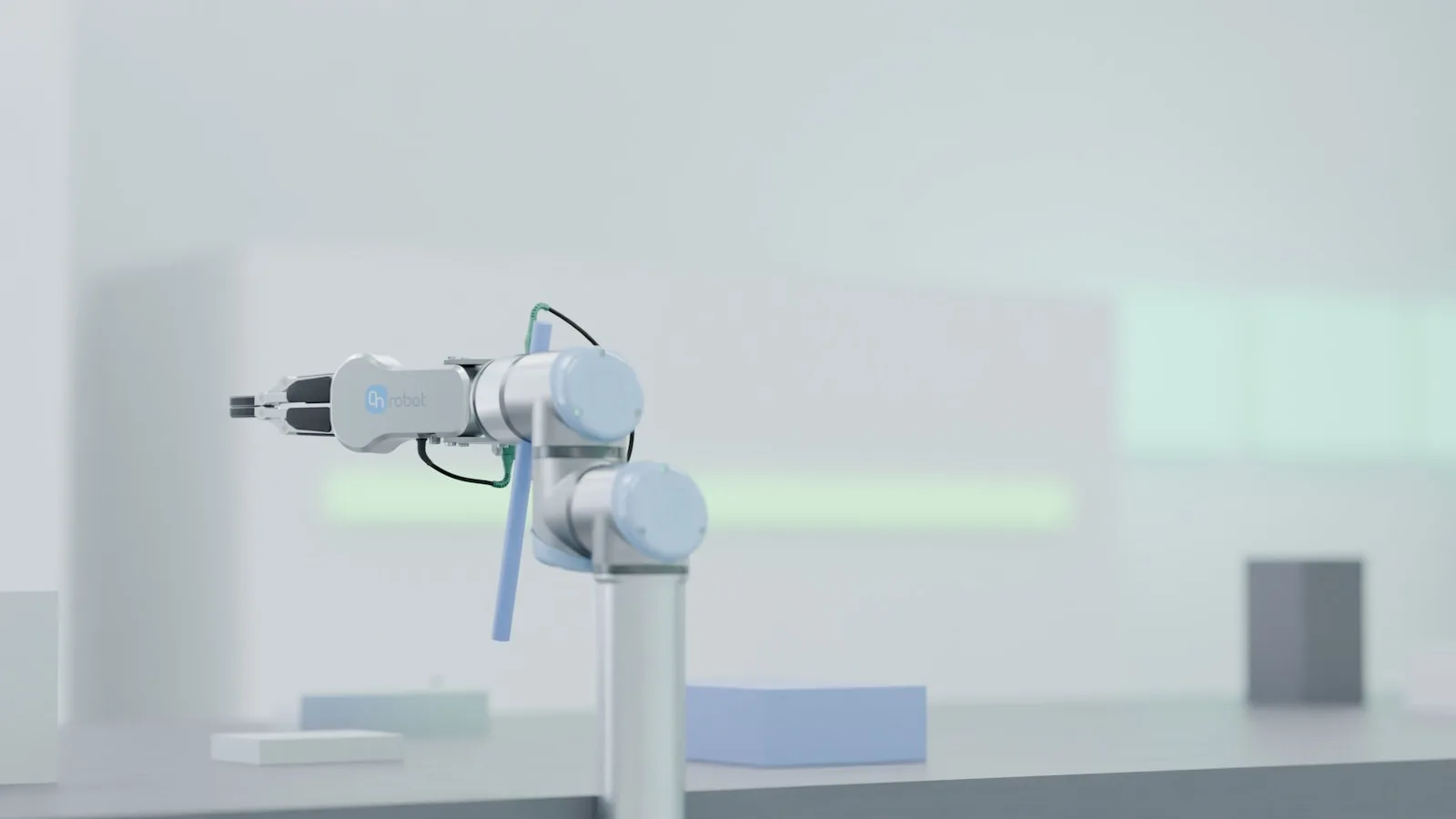
Anthropic introduced the Model Hardware Standard (MHS) on August 27, 2026, as a shared specification for AI agents to discover, understand, and safely operate programmable physical equipment. The standard is entering a limited research preview with scientific laboratories and advanced manufacturers; it is not yet generally available or open source.
The immediate goal is practical: replace weeks or months of custom integration work with a common interface that can connect AI agents to microscopes, liquid handlers, robotic arms, sensors, and manufacturing equipment.
What is the Model Hardware Standard?
The Model Hardware Standard, usually shortened to MHS, is a proposed compatibility layer between AI agents and physical machines. It began as a collaboration between Anthropic and HHMI Janelia Research Campus, where researchers needed several pieces of specialized laboratory hardware from different vendors to work together.
In its August 27 announcement, Anthropic described MHS as model-agnostic: it is not limited to Claude, and compatible agent systems can access it through standard control methods.
If you are new to the terminology, our guide to what artificial intelligence is and how it works explains the difference between AI models, applications, and automated systems.
Why AI-controlled hardware needs a standard
Laboratories and factories often contain instruments that were never designed to communicate with one another. Each device may use a different vendor application, programming language, data format, or proprietary interface. Connecting a robotic arm to a plate reader, camera, microscope, or liquid handler can therefore require a custom software bridge for every combination.
That becomes even more difficult when an AI agent needs to:
- Discover which devices are available
- Understand what each machine can measure or change
- Coordinate several instruments in the correct sequence
- Monitor sensor data while an experiment is running
- Respect physical limits and stop conditions
- Recover safely when equipment returns an error
MHS aims to give these devices a consistent vocabulary so an agent does not need a completely new integration for every machine.
How MHS works
A standardized hardware driver
At the center of MHS is a driver that translates between a device and the software controlling it. The driver exposes simple primitives such as read—for example, getting a temperature—and write, such as setting a temperature.
Instead of forcing an agent to understand every vendor’s software, MHS represents device capabilities in a standard format.
Machine characteristics and safety limits
Code alone may not reveal important physical details. A robot arm’s weight, range of motion, safe speed, or collision limits can matter as much as its API. MHS lets operators attach natural-language tags describing those characteristics.
The driver then creates a reference file describing what the device can measure, which settings can be adjusted, and which limits must be enforced. That gives the agent context it would not get from a basic command list.
Three control paths
Anthropic says MHS supports three mechanisms for controlling connected equipment:
- Model Context Protocol (MCP): A standardized way for an AI application to access tools and data.
- Command-line controls: Useful for direct operations and automation scripts.
- Code files and APIs: Used for fast, repeatable, or long-running sequences.
This separation matters. An AI agent can reason about an experiment at a high level, then hand time-sensitive steps to deterministic code rather than trying to reason through every millisecond of hardware operation.
Where MHS is being tested
Genentech lab automation
Genentech researchers tested MHS on a BCA protein assay that coordinated a liquid handler, robotic arm, and plate reader. The pilot showed both the potential and the limitations of AI-directed experiments.
When bubbles caused liquid-handling errors, Claude initially tried changing parameters in the same plate well, which made the physical problem worse. Researchers had to explain that the failure came from foaming and guide the system toward moving to a clean well and mixing more gently. The team then turned those lessons into reusable skills.
This is an important reality check: an AI model may understand the software error but still lack the physical intuition of an experienced scientist.
University of Washington research labs
Researchers in the Baker and Pinglay labs used MHS to create tools that remotely monitor instruments, supervise qPCR runs, and coordinate collision-free handoffs between a robotic arm and liquid handler.
The value is not simply automation. Research workflows change frequently, and experiments may need to be adjusted after unexpected results. A shared hardware layer could make flexible automation easier than a fixed factory-style script.
HHMI Janelia microscopy
At HHMI Janelia, MHS was used to connect a microscopy system involving lasers, cameras, mirrors, focus controls, and other components running through multiple vendor programs and programming languages.
Anthropic reports that adding a new camera to one MHS-enabled setup took minutes rather than the multi-day integration work previously required. The standardized state data also allowed researchers to reuse analysis methods across different data streams.
QuEra quantum-computing lasers
QuEra tested MHS while developing an automated controller for lasers used in its neutral-atom quantum computers. According to QuEra’s August 27 case study, the controller recovered the laser’s target lock in 695 of 700 validation tests, or 99.3%, across seven disturbance classes.
The company says recovery took seconds for the tested failures, compared with several minutes for a human expert. However, QuEra makes a crucial distinction: Claude helped develop and validate the controller through MHS, but the production recovery process runs as deterministic, inspectable code with the AI out of the runtime control loop.
What MHS could change
If the preview succeeds and the standard gains industry support, MHS could reduce several persistent barriers to physical AI:
- Faster integration: A device could be connected once through a reusable driver instead of requiring a new bridge for every workflow.
- Cross-vendor orchestration: Equipment from different manufacturers could expose states and procedures through one interface.
- Closed-loop experiments: Agents could monitor results and adjust parameters while an experiment is running.
- Better error recovery: Cameras and sensors could detect problems and trigger an approved response involving other connected devices.
- More reproducible automation: Device limits, states, and procedures could be documented in a machine-readable format.
Early participants named by Anthropic include organizations working in biotech, robotics, laboratory instruments, quantum computing, cloud software, and manufacturing. Anthropic also says Hugging Face plans MHS support for LeRobot, while Raspberry Pi is exploring integrations across some of its products.
What MHS does not solve yet
MHS is an early research preview, not a finished universal standard. Several limitations remain clear from Anthropic’s own report:
- It currently requires hardware with a programmable interface or a compatible driver.
- AI models still have limited spatial and physical reasoning.
- Human experts may need to explain physical failure modes that look like software errors.
- High-risk actions require carefully designed permissions and approval rules.
- Real-world performance from selected pilots does not guarantee the same results on every device or workflow.
- The specification has not yet been released as open source.
Anthropic says the preview will be used to develop safety evaluations, deployment practices, and a physical-safety roadmap before a broader open-source release.
How is MHS different from MCP?
MHS and the Model Context Protocol are related but not interchangeable.
MCP provides a standard way for AI applications to connect to tools and information. MHS focuses specifically on describing, discovering, and controlling physical hardware. An MHS-enabled device can expose capabilities to an agent through MCP, but MHS also supports command-line and code-based control paths.
In simple terms: MCP can be one communication route, while MHS defines the hardware-facing layer and its operational vocabulary.
Can developers use MHS now?
Not generally. Access is currently limited to an application-based research preview for selected participants in science and industry. The official MHS website provides an application form, but Anthropic has not announced a public download, final specification, or general-release date.
Developers should also be cautious about unofficial repositories or downloads claiming to be the complete public standard. Until Anthropic publishes an open-source release, the announcement and official MHS site are the authoritative sources.
Bottom line
Anthropic’s Model Hardware Standard is an early attempt to give AI agents a consistent and safer way to work with real machines. Its strongest evidence so far comes from limited partner pilots involving laboratory robots, microscopes, biological experiments, and quantum-computing lasers.
The idea is significant, but the preview is still narrow. MHS will need public technical documentation, independent testing, strong permission controls, and broad manufacturer support before it can become a dependable standard for physical AI.
Featured image: Brecht Corbeel on Unsplash.