iPhone Duo vs Galaxy Z Fold8: Which Foldable Is Better?
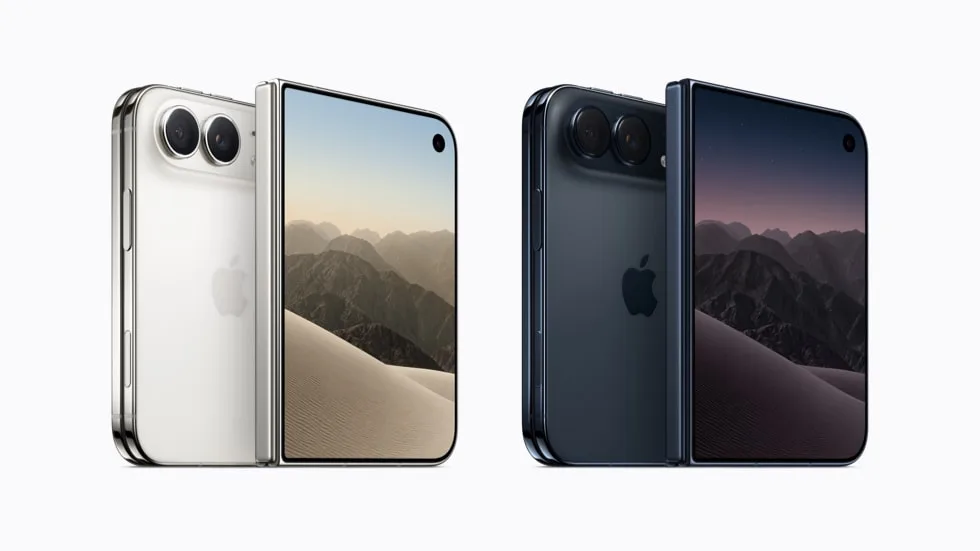
Quick verdict: the Samsung Galaxy Z Fold8 is the better practical buy for most foldable shoppers because it costs $100 less, weighs 53 grams less, is thinner, is available now, and benefits from Samsung’s mature foldable software. The new iPhone Duo is the more compelling choice for committed Apple users who want iOS, stronger dust protection, Apple Pencil support, up to 2TB of storage, and the tightest possible integration with the Apple ecosystem.
Apple announced the iPhone Duo on September 9, 2026, marking its first entry into foldable phones. It starts at $1,999, opens for preorder on October 16 and ships on October 23. Samsung launched the Galaxy Z Fold8 in July for $1,899.99, with general availability beginning August 7.
This is a launch-day specifications comparison based on official Apple and Samsung documentation. The iPhone Duo has not yet reached buyers, so battery endurance, camera quality, hinge durability and crease visibility cannot be judged responsibly from extended real-world testing.
iPhone Duo vs Galaxy Z Fold8: key specifications
| Feature | iPhone Duo | Galaxy Z Fold8 |
|---|---|---|
| U.S. starting price | $1,999 | $1,899.99 |
| Availability | Preorder October 16; release October 23 | Available since August 7 |
| Main display | 7.6-inch OLED, up to 120Hz | 7.6-inch Dynamic AMOLED 2X, 1–120Hz |
| Cover display | 5.4 inches | 5.5 inches |
| Peak outdoor brightness | 3,000 nits | Up to 3,000 nits |
| Weight | 254g | 201g |
| Thickness when folded | 11.3mm | 9.7mm |
| Processor | Apple A20 Pro | Snapdragon 8 Elite Gen 5 for Galaxy |
| Rear cameras | 48MP main + 48MP ultrawide | 50MP main + 50MP ultrawide |
| Storage | 256GB to 2TB | 256GB to 1TB |
| Water/dust rating | IP68 | IP48 |
| Stylus | Apple Pencil USB-C support promised later in 2026 | No stylus support listed |
| Operating system | iOS 27.1 | Android 17 with One UI 9 |
Prices are official U.S. launch prices before tax, promotions and trade-ins. Specifications may vary by market.
Design and portability: Samsung wins clearly
Both phones use a book-style design with a smaller outer display and a 7.6-inch tablet-like screen inside. Their screen sizes are remarkably close, but the hardware around those displays is not.
The Galaxy Z Fold8 weighs 201g, while the iPhone Duo weighs 254g. That 53g gap is large enough to matter in a device held one-handed, carried in a pocket and used for long reading sessions. Samsung is also thinner: 9.7mm folded and 4.5mm unfolded, compared with Apple’s 11.3mm and 5.2mm.
Apple counters with a grade 5 titanium enclosure, Ceramic Shield protection and a polished hinge containing more than 100 components. Its 5.4-inch outer display is designed to keep the phone compact, while both Apple screens share an aspect ratio so content scales consistently as the device opens.
Samsung uses an Armor Aluminum frame and its Flex Titanium display structure. The company redesigned the Fold8 around a 5.5-inch 10:16 cover screen and a 4:3 inner canvas. It is the more comfortable specification on paper if low weight and pocketability are priorities.
Winner: Galaxy Z Fold8. Apple’s materials sound premium, but Samsung’s substantial weight and thickness advantages will affect every day of ownership.
Displays: a close tie with different strengths
The two main displays are both 7.6 inches, refresh at up to 120Hz and claim 3,000 nits of peak outdoor brightness. The iPhone Duo uses a 1878-by-2670 Super Retina XDR folding OLED at 430 pixels per inch. Samsung’s Fold8 uses a 1848-by-2448 Dynamic AMOLED 2X panel at 403ppi with an adaptive 1–120Hz refresh rate.
Apple adds a nano-texture finish intended to reduce glare and make the crease less visible. Samsung describes a low-reflection finish and Flex Titanium support designed to reduce crease visibility while strengthening the display structure.
Apple has the higher pixel density and promises Apple Pencil USB-C support later in the year. Samsung offers a slightly larger 5.5-inch cover display and a wider 4:3 inner ratio that should work well for reading, video and side-by-side content.
Winner: tie until independent testing. Apple has the specification edge for sharpness and stylus use; Samsung’s proportions and adaptive refresh behavior may be more practical. Brightness, color accuracy, reflections and crease visibility need side-by-side measurements.
Multitasking and software: Samsung has experience, Apple has ecosystem appeal
Samsung is on its eighth generation of Galaxy Fold hardware. Android 17 and One UI 9 are designed for the Fold8’s wide inner screen, and Samsung promotes Multi Window, Galaxy AI and context-aware features that can suggest multitasking when useful. Years of developer and app adaptation also reduce the risk of awkward layouts.
Apple has redesigned iOS 27 for the Duo. Split View lets users open two apps side by side, save app pairs, swap applications quickly and even open two windows of the same app. Apple says Netflix, Zoom and Slack already support experiences tailored to the folding screen.
Those are meaningful additions, but this is Apple’s first foldable release. Buyers should expect some third-party apps to take time to optimize their navigation, aspect ratio and continuity behavior. Samsung’s advantage is not just a longer feature list; it has had more time to identify the small issues that make a foldable feel natural.
Still, the winner changes if your other devices are a Mac, iPad, Apple Watch and AirPods. Apple’s ecosystem features, iCloud, FaceTime and device continuity can outweigh Samsung’s foldable maturity. Readers considering Apple’s newest audio hardware can also see our AirPods 5 early review.
Winner: Galaxy Z Fold8 for foldable maturity; iPhone Duo for existing Apple households.
Performance and AI: no responsible winner yet
The iPhone Duo uses Apple’s new A20 Pro with a six-core CPU, seven-core GPU and dual 16-core Neural Engine. Apple says a vapor chamber and dual-battery layout help sustain performance for games, multitasking and on-device AI.
The Galaxy Z Fold8 uses Qualcomm’s Snapdragon 8 Elite Gen 5 for Galaxy, paired with 12GB of RAM in 256GB and 512GB configurations and 16GB in the 1TB model. It runs Galaxy AI and partner experiences such as Gemini on a platform already shipping to customers.
Manufacturer claims cannot establish which phone is faster. The devices run different operating systems, app versions and thermal policies, so raw benchmark scores will not tell the whole story. Real testing should compare sustained performance, app exports, gaming frame rates, temperature and battery drain.
Apple’s new Siri AI emphasizes personal context, on-screen awareness and action across apps. Samsung’s Galaxy AI has the advantage of existing workflows and a broader launch track record. If desktop AI is more relevant to you than phone assistants, our Gemini desktop app for Windows review examines Google’s newest client.
Winner: too early to call.
Cameras: similar dual systems, different software ideas
Apple equips the Duo with a 48MP Fusion main camera and 48MP ultrawide. The main sensor offers an optical-quality 2x crop, but there is no dedicated telephoto camera. Samsung uses 50MP main and 50MP ultrawide cameras, also without a separate telephoto lens, and lists up to 10x digital zoom.
The folding form creates useful shooting modes on both devices. Apple’s Duo Preview lets the subject see the shot on the outer display, while Smart Take can automatically capture when people are posing. Samsung provides Dual Recording and My FanCam, which tracks a chosen subject and reframes video for a selected aspect ratio.
Apple lists Dolby Vision recording up to 4K at 120fps on the main camera. Samsung lists 8K recording at 30fps. Resolution alone does not decide video quality: stabilization, rolling shutter, dynamic range, audio and low-light performance matter more in many situations.
Winner: wait for controlled camera comparisons. Both offer capable dual-camera specifications, but neither gives foldable buyers a true long-range optical telephoto.
Battery and charging: the numbers are not directly comparable
Samsung discloses a 4,800mAh typical dual battery and up to 26 hours of continuous video playback. With a compatible 45W charger, Samsung says the Fold8 can reach up to 63 percent in around 30 minutes. It also supports 20W wireless charging and Wireless PowerShare.
Apple does not publish a milliamp-hour figure. It claims up to 31 hours of video playback on the inner display, 44 hours on the outer display and 24 hours of mixed typical use. Apple says the phone can reach 50 percent in around 20 minutes using a 60W-capable adapter, or around 30 minutes with a compatible MagSafe or Qi2 setup.
These results come from different companies using different test methods, so placing 31 hours next to 26 hours does not prove that Apple lasts longer. Screen mode, brightness, network activity and app behavior can change the result dramatically.
Winner: undecided. Samsung publishes battery capacity and adds reverse wireless charging; Apple claims faster time to 50 percent and longer video figures that require independent verification.
Durability: Apple has the rating advantage
The iPhone Duo carries an IP68 rating. Apple specifies water resistance at up to 6 meters for 30 minutes under controlled laboratory conditions, and the first digit indicates a dust-tight enclosure.
The Galaxy Z Fold8 is rated IP48. Samsung specifies freshwater immersion up to 1.5 meters for 30 minutes, but the “4” dust digit means it is protected against solid objects larger than 1mm rather than being dust-tight. Samsung also warns that water resistance is not permanent and advises against beach or pool use.
Neither rating makes a folding inner screen immune to sand, scratches or hinge damage. Water resistance can diminish with wear, and accidental damage may not be covered like a manufacturing defect.
Winner: iPhone Duo on paper. Its IP68 certification is a major specification advantage, although long-term hinge and inner-screen durability still require real-world evidence.
Storage, SIMs and accessories
Both phones start with 256GB. Samsung offers 512GB and 1TB versions; Apple extends the range to 2TB. The iPhone Duo is eSIM-only worldwide, while Samsung lists physical SIM and eSIM support. That difference matters to travelers whose carriers still rely on physical cards.
Apple promises support for the USB-C Apple Pencil later in 2026, which could make the Duo attractive for handwritten notes and document markup. Samsung does not list S Pen support for the standard Fold8. Both manufacturers sell chargers separately.
Winner: iPhone Duo for storage and stylus support; Galaxy Z Fold8 for SIM flexibility.
Price and value: Galaxy Z Fold8 wins
The difference between $1,999 and $1,899.99 is only about $100, small relative to the total price. Yet Samsung delivers a lighter, thinner phone that is already available and often sold with trade-in incentives. Apple’s model will not ship until October 23 and commands a first-generation premium.
Apple’s higher price becomes easier to justify if you need iOS, 2TB storage, Apple Pencil support or IP68 protection. Otherwise, the Fold8 gives buyers a mature foldable experience for less money.
Do not compare promotional monthly payments without calculating the total cost, carrier commitment, required plan and trade-in value. Storage upgrades, insurance and cases can push either phone far beyond its starting price.
Which foldable should you buy?
Buy the iPhone Duo if:
- You want the first foldable iPhone and intend to remain in Apple’s ecosystem.
- You use Apple Watch, AirPods, iCloud, FaceTime and Mac continuity features.
- IP68 dust protection matters more than having the lightest device.
- You want Apple Pencil support or need up to 2TB of storage.
- You are comfortable waiting until October 23 and accepting first-generation uncertainty.
Buy the Galaxy Z Fold8 if:
- You want a foldable now rather than waiting for Apple’s release.
- Weight and pocket comfort are high priorities.
- You value mature multitasking and Android customization.
- You want physical SIM support, reverse wireless charging or a lower starting price.
- You prefer a platform with eight generations of foldable development behind it.
If you are open to a conventional phone rather than a foldable, our Pixel 11 upgrade review covers a less experimental flagship path.
Final verdict
The iPhone Duo is the most important new competitor Samsung’s Fold line has faced, and its September 9 announcement makes this comparison bigger than a normal annual specification update. Apple brings an impressive IP68 rating, dense displays, Apple Pencil support, premium storage options and an iOS experience redesigned for two screens.
Even so, the Galaxy Z Fold8 is the smarter recommendation for most buyers today. It is dramatically lighter, thinner, less expensive, already available and supported by Samsung’s long foldable experience. The iPhone Duo wins for Apple ecosystem loyalty and several standout specifications, but a definitive quality verdict should wait until the October 23 release allows independent battery, camera and durability testing.
Sources: Apple’s official iPhone Duo announcement and technical specifications; Samsung’s official Galaxy Z Fold8 launch and specification table.