Google Pixel 11 Review for Pixel 10 Owners: Is It Worth Upgrading?
Most Pixel 10 owners should not upgrade to the Google Pixel 11 at its $899 launch price. The Pixel 11 is a refined successor with more base storage, a newer Tensor G6 processor, a larger main camera sensor, 30x zoom, and faster 25W Qi2.2 wireless charging. But its display, RAM, wired charging, physical size, and battery capacity remain very close to the Pixel 10.
The upgrade becomes reasonable if your Pixel 10 is damaged, 128GB is no longer enough, you regularly use magnetic wireless charging, you value the camera improvements, or a trade-in reduces the real cost substantially. Otherwise, keep the Pixel 10 and wait for a larger generational change.
This is an evidence-based buying assessment using Google’s published specifications and recent independent reviews. It is not presented as an AllYourTech hands-on laboratory test.
Pixel 11 vs Pixel 10 at a glance
| Feature | Google Pixel 11 | Google Pixel 10 | Upgrade impact |
|---|---|---|---|
| US launch price | From $899 | Often available below its original price | Pixel 10 can be the better value when discounted |
| Base storage | 256GB | 128GB | Meaningful for local photos, video, games, and offline files |
| Processor | Google Tensor G6 | Google Tensor G5 | Newer and more efficient, but the everyday difference appears modest |
| RAM | 12GB | 12GB | No capacity upgrade |
| Display | 6.3-inch OLED, 60–120Hz | 6.3-inch OLED, 60–120Hz | Little reason to upgrade for the screen |
| Rear cameras | 48MP wide, 13MP ultrawide, 10.8MP 5x telephoto | 48MP wide, 13MP ultrawide, 10.8MP 5x telephoto | Similar resolution, but Pixel 11 gets a larger main sensor and longer digital zoom |
| Maximum zoom | 30x Super Zoom | 20x | Useful mainly for frequent long-distance shooting |
| Battery capacity | 4,985mAh typical | 4,970mAh typical | The 15mAh increase is negligible by itself |
| Wired charging | 30W | 30W | No meaningful change |
| Wireless charging | Up to 25W Qi2.2 | Up to 15W Qi2 | One of the clearest upgrades |
| Software at launch | Android 17 | Android 16, upgradeable | Pixel 10 still receives current software and long support |
Google announced the Pixel 11 on August 12, 2026, with US availability beginning August 20. The company’s official Pixel 11 announcement lists a $899 starting price and confirms that every non-folding Pixel 11 model starts with 256GB of storage.
Our verdict: a good phone, but a weak one-year upgrade
The Pixel 11 is easy to recommend to someone arriving from an older or failing phone. It combines a versatile triple-camera system, magnetic charging, seven years of updates, and a clean Android experience in a relatively compact flagship body.
That does not make it a sensible annual upgrade. The Pixel 10 already has the same screen size and refresh-rate range, the same RAM capacity, a 5x telephoto camera, built-in Qi2 magnets, and a long update commitment. The Pixel 11 improves the experience around the edges rather than replacing its foundation.
This conclusion matches early independent assessments. 9to5Google’s initial review described the Pixel 11 as a modest update and reported that Tensor G6 felt similar to Tensor G5 during normal daily use, despite some faster app loading. Android Central likewise concluded that existing Pixel 10 owners have little reason to change.
Design and display: familiar in almost every way
The base Pixel 11 retains a 6.3-inch OLED panel with a 60–120Hz refresh-rate range. It is not an LTPO display capable of smoothly dropping to 1Hz like the Pro models. Google did not turn the base model into a smaller Pixel 11 Pro.
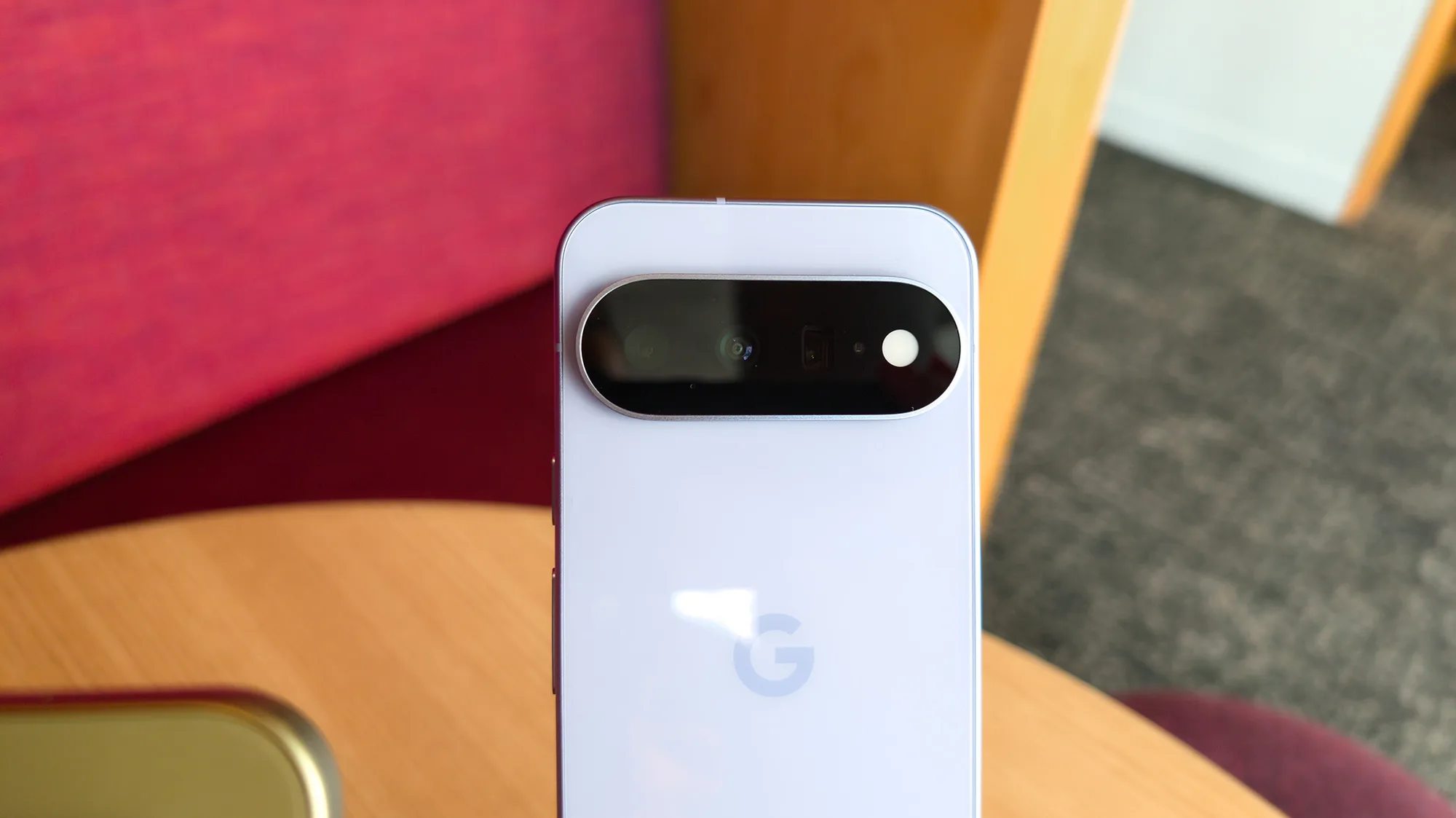
Its overall dimensions are effectively unchanged from the Pixel 10, although independent comparisons report that the new phone is roughly 7 grams lighter. The camera-bar treatment has changed, but the phones remain close enough that design alone should not drive an upgrade.
This continuity is positive if you like the Pixel 10’s size and shape. It is disappointing if you wanted a brighter class of display, slimmer body, dramatically stronger magnets, or a redesign. Case compatibility should never be assumed from similar dimensions because the camera area and button or cutout tolerances may differ; buy an accessory specifically listed for Pixel 11.
Performance: Tensor G6 is better, not transformational
Pixel 11 moves from Tensor G5 to Tensor G6 and pairs it with Google’s newer Titan M3 security coprocessor. Google positions the chip around on-device AI, efficiency, and Gemini features. The phone still has 12GB of RAM, so the hardware story is about a newer processor rather than more memory.
For browsing, messaging, photography, navigation, and social apps, the Pixel 10 was already fast enough. Early reviewers have observed modestly quicker cold app launches and a smooth interface, but not a dramatic day-to-day leap. That is exactly what owners of a one-year-old flagship should expect.
A newer chip can still matter over several years: it gives Google more headroom for future on-device features and may improve efficiency under particular workloads. But do not upgrade solely because “G6” is one number higher than “G5.” Look for a workflow your current phone cannot perform satisfactorily.
What about the new AI features?
Pixel 11 launches with Android 17 and newer Gemini-powered experiences. Some features depend on the G6 hardware, language, country, account, or cloud service, while others may reach older Pixels through Android updates and Pixel Drops.
Buy the phone for capabilities available and useful to you today. Do not assume every demonstration, regional feature, or future promise will work on your account indefinitely. Pixel 10 also has years of operating-system, security, and feature updates remaining.
Storage: the most practical everyday upgrade
The base Pixel 11 includes 256GB, double the 128GB entry capacity of the Pixel 10. A 512GB Pixel 11 option is also available in supported markets.
This matters if your current phone constantly runs near its storage limit. Local 4K video, downloaded streaming content, large games, offline maps, and original-quality photos can consume 128GB quickly. More local storage also reduces the pressure to delete files or pay for a larger cloud plan.
However, compare like with like. The Pixel 11’s $899 entry price is higher than the cheapest original Pixel 10 configuration because the new model no longer starts at 128GB. If you already own a 256GB Pixel 10 with ample free space, the storage change provides no benefit. If you are buying new, compare the live price of a 256GB Pixel 10 against the 256GB Pixel 11—not the discontinued entry configuration.
Camera: better hardware, familiar system
On paper, both phones use a triple rear layout with a 48MP wide camera, 13MP ultrawide camera, and 10.8MP 5x telephoto camera. Resolution alone therefore hides the main change.
Google says Pixel 11 uses a new, larger 48MP main sensor with 56% greater light sensitivity. It also extends Super Zoom from 20x to 30x, powered by Tensor G6. The official Pixel comparison tool confirms the 30x zoom range and the familiar 5x telephoto hardware.
The likely benefits are better low-light capture, more flexibility after sunset, and improved long-distance framing. These are useful changes, but they do not guarantee that every Pixel 11 photo looks substantially better than a Pixel 10 photo. Processing, subject movement, lighting, and the selected lens still matter.
Do not treat 30x as optical zoom. The phone’s telephoto camera provides 5x optical magnification; higher levels depend on cropping, multi-frame processing, and computational techniques. The result can be convenient for signs or distant subjects, but it is not equivalent to a dedicated 30x optical lens.
Who will notice the camera improvement?
- Parents and travelers who frequently shoot indoors or at night
- Users who often crop telephoto images
- People moving from an older Pixel without a dedicated telephoto lens
- Creators who value Google’s new capture tools more than manual controls
If you mainly take daylight photos at 1x and share compressed images on social media, the Pixel 10 remains highly capable. Wait for full controlled camera comparisons before paying hundreds of dollars for a subtle difference.
Battery life: efficiency matters more than 15mAh
Pixel 11 has a typical 4,985mAh battery versus 4,970mAh in Pixel 10. That 15mAh difference is less than one percent and cannot explain a meaningful endurance jump by itself.
Any real improvement is more likely to come from Tensor G6 efficiency, Android 17 behavior, modem performance, and background-process management. Google advertises more than 30 hours for the Pixel 11 under its test conditions, but actual results change with brightness, signal quality, camera use, gaming, navigation, and always-on features.
9to5Google reported strong all-day longevity in an early week of mixed use, while also saying it was not a quantum leap. That supports the broader verdict: battery is a reason to consider Pixel 11 when replacing an older phone, not a compelling reason to trade a healthy Pixel 10.
If your existing Pixel is losing endurance, first check for software causes using our guide to stopping Android apps from draining battery in the background. An inexpensive battery or settings fix can be better value than a yearly upgrade.
Charging: 25W Qi2.2 is the standout improvement
Wired charging remains at 30W. Pixel 11’s clearer advance is wireless charging: Google added Qi2.2 compatibility at up to 25W to the base Pixel 11, compared with 15W on Pixel 10.
This makes the upgrade more attractive for someone who charges at a desk, uses Pixelsnap or other certified magnetic accessories, and values a cable-free routine. It is less important if you plug in overnight and rarely use wireless charging.
The charger and charging conditions matter. A random high-wattage brick does not guarantee the phone’s maximum rate; the power supply, cable, charging protocol, temperature, and battery level all affect speed. Our USB-C charger wattage guide explains how to match a charger to the device without overbuying.
Software support: Pixel 10 still has a long life
Google promises seven years of OS and security updates plus regular Pixel Drops for current Pixel flagships. The Pixel 10 therefore remains early in its support window. Moving to Pixel 11 adds roughly one year to the end date, but that is rarely valuable enough to justify replacing a one-year-old phone now.
Pixel 11 ships with Android 17, while Pixel 10 can upgrade. Some G6-dependent AI tools may stay exclusive, but core Android improvements and many Pixel features are not confined to the latest device. Wait to see which feature you actually need rather than upgrading for an uncertain exclusivity list.
Pixel 11 price and real upgrade cost
The base Pixel 11 launched in the United States at $899 with 256GB. Regional pricing, tax, carrier offers, trade-in values, and availability differ. Google lists the Pixel 11 Pro from $1,099 and Pixel 11 Pro XL from $1,299.
The number that matters is not the sticker price. Calculate:
Real upgrade cost =
new phone price
+ tax
+ new case or charger
+ financing cost
- trade-in value
- confirmed promotion
Then ask what that amount buys over the Pixel 10. If it only buys a newer model number and slightly quicker loading, keep your money. If a strong trade-in reduces the cost and you need storage, camera sensitivity, or faster wireless charging, the decision becomes more reasonable.
Do not value a store credit at its headline amount unless you would have bought that product anyway. Check whether a trade-in quote can be reduced after inspection, whether promotional credit expires, and whether financing locks you into a carrier plan.
Should you buy Pixel 11 instead of a discounted Pixel 10?
For a new buyer, Pixel 11 is the safer long-term choice when the price gap is small. You get 256GB by default, one more year of support, newer processing hardware, improved low-light camera potential, longer zoom, and faster wireless charging.
A discounted Pixel 10 is the value choice when:
- It costs substantially less in the same storage capacity
- You do not use wireless charging heavily
- You are satisfied with 20x maximum zoom
- You want the same 6.3-inch 60–120Hz class of display
- You plan to replace the phone before its update window ends
Compare warranty status and battery age when buying an older model. A small discount is not worth accepting a used battery, shorter return window, or unclear seller support.
Should you pay more for Pixel 11 Pro?
The $200 step from the base Pixel 11 to the $1,099 Pixel 11 Pro is worth considering before checkout. The Pro has a brighter LTPO display, a more advanced camera system, higher-resolution ultrawide and telephoto sensors, and Pro-only features such as HiLight.
Choose the base Pixel 11 if you want a capable compact Pixel and prioritize value, 256GB storage, and the 5x telephoto. Choose the Pro if display efficiency, camera flexibility, and premium hardware are the reasons you are upgrading in the first place. Paying $899 and then wishing you had the Pro camera system is worse than waiting or buying the right model once.
Who should upgrade from Pixel 10?
Upgrade if:
- Your Pixel 10 is damaged, unreliable, or has a seriously degraded battery.
- Your 128GB model is continually full and 256GB or 512GB solves a real problem.
- You use magnetic wireless charging daily and want the 25W Qi2.2 improvement.
- Low-light photography and 30x zoom are important to you.
- A verified trade-in or employer benefit makes the net cost unusually low.
- A G6-exclusive feature is available in your region and genuinely changes your workflow.
Keep Pixel 10 if:
- Performance, battery health, and storage are still satisfactory.
- You mainly use wired charging.
- You expected a substantially better display or redesigned body.
- You already own the 256GB Pixel 10.
- You take mostly daylight 1x photos.
- You are upgrading only because the Pixel 11 is newer.
Pros and cons
Pixel 11 advantages
- 256GB base storage
- New Tensor G6 and Titan M3 hardware
- Larger main camera sensor
- 30x Super Zoom
- Up to 25W Qi2.2 wireless charging
- Android 17 out of the box
- Slightly lighter body
Pixel 11 drawbacks
- $899 starting price
- Very similar design and display
- Same 12GB RAM
- Almost unchanged battery capacity
- Same 30W wired charging
- Many software benefits may not feel unique in everyday use
- HiLight and the strongest camera hardware remain Pro-only
Frequently asked questions
Is Pixel 11 faster than Pixel 10?
Yes. Pixel 11 uses the newer Tensor G6, and early reviewers observed somewhat quicker loading and a smooth interface. The difference in normal apps appears incremental rather than dramatic.
Does Pixel 11 have a better camera?
Google says the base Pixel 11 has a larger 48MP main sensor with greater light sensitivity and extends Super Zoom to 30x. The overall three-camera layout and listed resolutions remain similar, so the improvement is meaningful but not a total camera-system replacement.
Does Pixel 11 have better battery life?
It may be more efficient, but its battery is only 15mAh larger. Google claims more than 30 hours under its test method, and early reviews report solid endurance. That is not yet evidence of a dramatic gain over a healthy Pixel 10 in every workload.
Can Pixel 10 get Android 17?
Yes. Pixel 10 is upgradeable and remains within Google’s seven-year support commitment. Some hardware-dependent Pixel 11 features may not transfer.
Is Pixel 11 worth $899?
It is reasonable for a new buyer who wants 256GB and plans to keep the phone for years. It is difficult to justify as a full-price upgrade from Pixel 10 unless the storage, camera, wireless-charging improvements, or trade-in value solve a specific need.
Final recommendation
Keep the Pixel 10 if it is working well. It remains fast, supported, and close to the Pixel 11 in the areas people touch most: screen, memory, size, wired charging, and core Android experience.
Buy Pixel 11 if you are replacing an older phone, need at least 256GB, or will make regular use of the new camera and 25W wireless charging. For Pixel 10 owners, the smarter upgrade is usually to wait—or spend only when the net trade-in cost is low enough that the specific improvements justify it.
Prices and availability were checked against Google’s US announcement on September 2, 2026. Retail offers change frequently.